Can You Do Yoga Teacher Training While Working Full Time?
This is the question I get asked more than any other about our teacher training. Not “am I flexible enough” or “do I need to be advanced”. It is “I have a full time job, can I actually fit this in?”
The short answer is yes. Most of the people who have done our training over the years were working full time when they did it. Nurses, tradies, teachers, office workers, parents juggling school runs. The course was built for exactly those people.
Here is how it works, what it really asks of you, and how to tell if now is the right time.
Why we run the training over weekends
There are two ways to do a 250 hour yoga teacher training. One is an intensive: you take three or four weeks off work, often overseas, and do it all in one hit. The other is spread out over a few months so you can keep living your life.
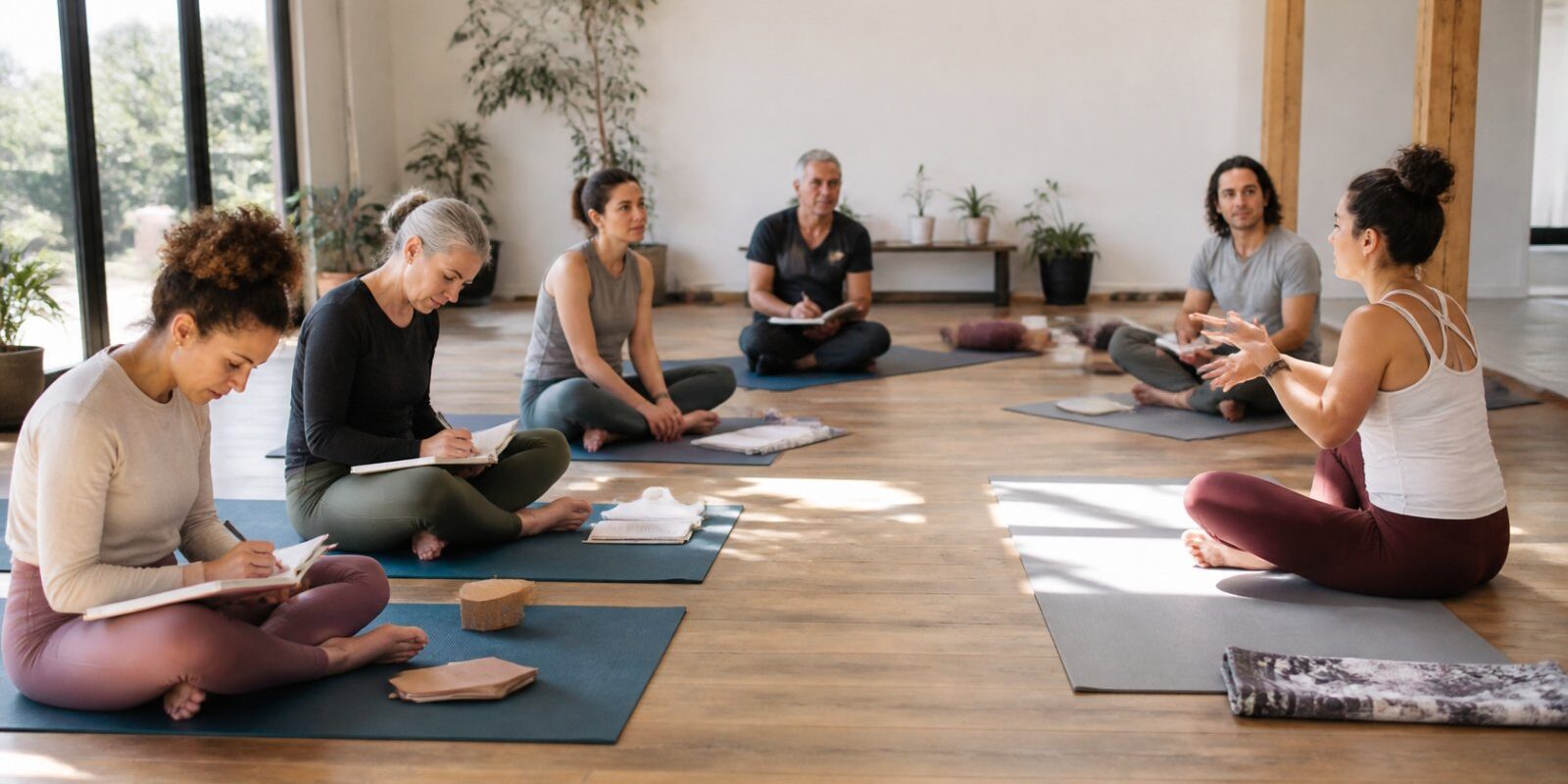
We chose the second way on purpose. Our 250 hour Yoga Alliance certified teacher training runs over 9 fortnightly weekends at the studio in Albion. The 2027 intake starts Saturday 17 April 2027 and finishes Sunday 8 August 2027.
Fortnightly means you train one weekend, then you have a weekend off. You never miss a day of work. You keep your income. And you get time between weekends to practise what you have learned, which is where most of the real learning happens anyway.
What it actually asks of you
I am not going to pretend it asks for nothing. Every second weekend is a real commitment, and I would rather you go in with your eyes open.
On top of the training weekends, you will want to keep coming to class during the week. That is not a chore. Your own practice is the foundation of everything you will teach, and the course includes four months free membership so it costs you nothing extra to be on the mat.
You will also do some reading and some practice teaching between weekends. A friend, a partner or a couple of people from your work are usually happy to be your first students. It is a great way to build confidence without pressure.
If you are honest with yourself and the people around you about those weekends, it fits. If every second weekend is already locked in with other commitments, it may be better to wait for the next intake. I have had people tell me exactly that, and I respect it. The training will still be here.
Why doing it while you work is often better
People sometimes see a full time job as the thing standing in the way. I think it is often an advantage.
When you spread the course over four months, everything has time to sink in. You learn anatomy on a weekend, then feel it in your own body in class on Tuesday. You learn how to sequence a class, then try it with a friend the following week. That rhythm of learn, practise, reflect is how skills stick.
You also do not have to choose between your career and something you love. Plenty of our graduates still work full time and teach one or two classes a week because they love it. Others use the training purely to deepen their own practice and never teach at all. Both are great outcomes.
What you cover over the 9 weekends
The course is practical from day one. Across the weekends you work through:
Practical teaching experience, so you are actually teaching, not just listening.
Safe and functional asana alignment and hands on adjusting and assisting.
Yoga anatomy, breathwork and bandhas, and energy systems.
Meditation and mindfulness, yoga philosophy and the history of yoga.
Intelligent sequencing, teaching skills and confidence, and voice and expression.
The business of yoga and transformational leadership.
You learn from a team of experienced teachers: myself, Ramon, Melissa Billington, Saliesh and Marina, and Jai. You get mentoring all the way through the course, and free lifetime mentoring after you graduate, so you are never on your own when you start teaching.
You do not need to be advanced
A lot of people with busy jobs worry that they have not practised enough to be ready. You do not need to be advanced. You need to be willing to learn and grow. I wrote more about that in do you need to be advanced to do yoga teacher training.
What matters far more than how deep your backbend is: turning up, being curious, and being open to what you discover about yourself. Teacher training is a life changing experience, and a lot of that has nothing to do with poses.
The cost, and making it work financially
Keeping your job also makes the investment easier to manage. The 2027 training is $4,399, or $3,799 early bird if you pay in full by Friday 15 January 2027. A $600 deposit holds your spot and payment plans are available, so you can spread the cost over the months before the course starts.
You also get over $2,500 in bonuses, including those four months of free membership. Our training has sold out 8 years in a row, and 65% of our graduates go on to teach.
How to know if now is the right time
Ask yourself three simple questions. Can I keep every second weekend free from April to August? Do I want to go deeper into my own practice, or share yoga with other people? Am I ready to be a beginner again for a little while?
If the answer is yes to those, your full time job is not a reason to wait. If you want to talk it through, call me on 0414 420 041 or download the 2027 info pack and have a read. It is also worth reading how to choose a yoga teacher training so you know what to ask any course, including ours.
And if you have never been to the studio, start with our 10 days of unlimited yoga for $48 and come and feel the place for yourself.
Curious what the weekends themselves are like? Here is what a yoga teacher training weekend actually looks like.
Simon Kerle, Founder, Raw Power Yoga
Keep reading
Do You Need to Be Advanced to Do Yoga Teacher Training?